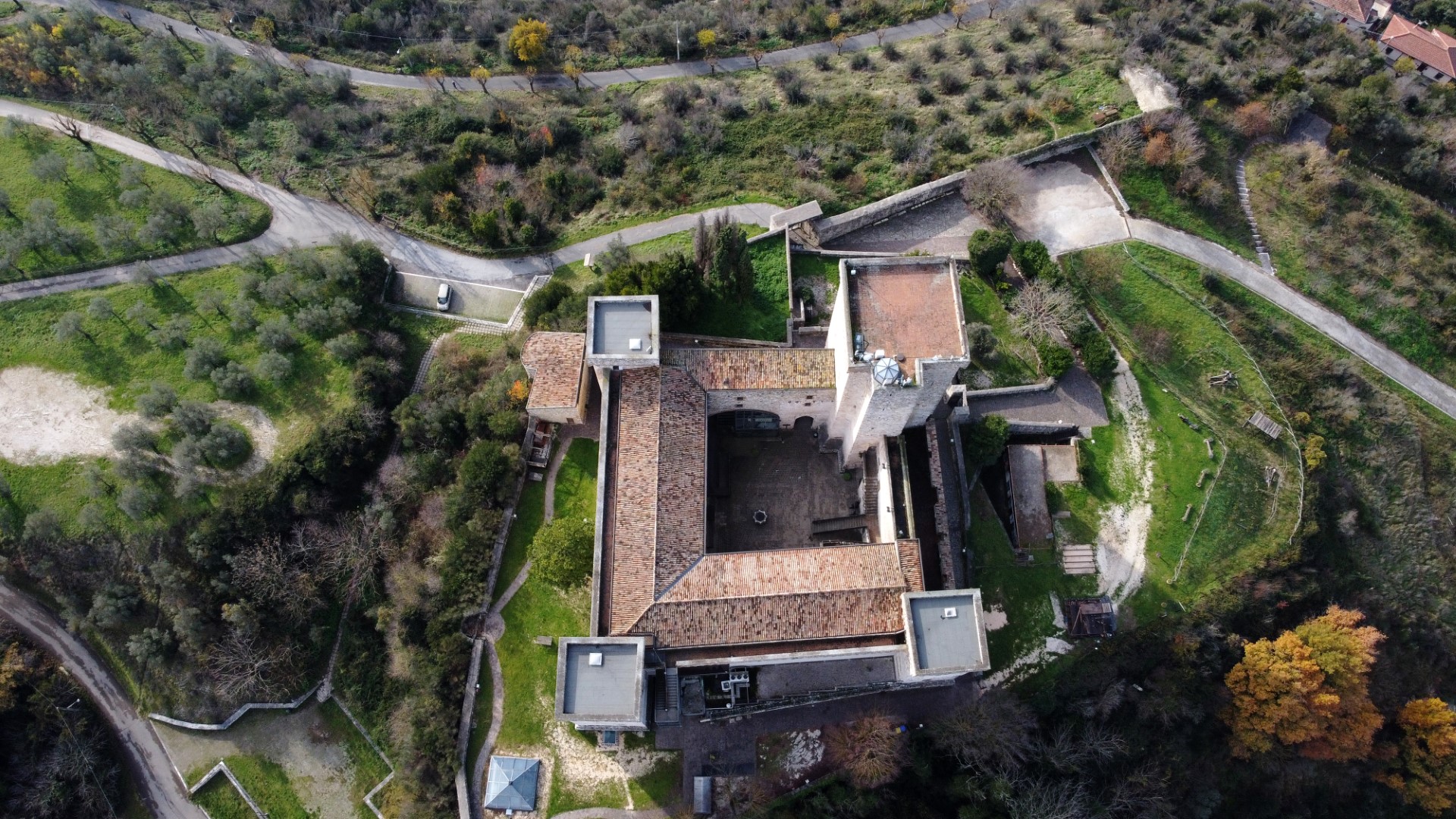
The area around Narni was already inhabited in the Paleolithic era, as evidenced by findings in some of the caves that make up the territory. Around the beginning of the first millennium BCE, populations of Appenninic culture of Indo-European origin, the Osco-Umbri, settled in the area, calling their settlement Nequinum.
In 300 BCE, the citadel came under the interests of Rome, which besieged it with the consul Quintus Appuleius Pansa. However, they achieved unsuccessful results due to its rugged location. It took over a year to accomplish the task, which happened in 299 BCE, thanks to the betrayal of two local individuals who allowed the Romans to enter the walls. It then became a Roman colony and a strategic center along the Via Flaminia. To punish the support given to the Gauls, and considering Nequinum an ill-omened name (in Latin, "nequeo" means "I cannot," and "nequitia" means "uselessness"), the Romans changed the city's name in Latin to Narnia, after the nearby river Nar, the current Nera.
Not much information is available about that period, but it is believed that the city might have played a certain role during the course of the first two Punic Wars. Along the Nera River, near the hamlet of Stifone, where the ancient port of the Roman city was located, an archaeological site has recently been identified as a Roman shipyard. Information about the ancient navigability of the Nera River is also found in the works of Strabo and Tacitus. Notable is the passage in which the consul Gnaeus Calpurnius Piso, in 19 CE, decided to embark at Narni with his wife Plancina in order to reach Rome without arousing suspicion. Narni became a Municipium in 90 BCE. In 30 CE, the Roman emperor Nerva was born there. In the early Christian era, Narnia was mentioned by Tertullian in the Apologeticum, in a list of "false gods" compiled in the first century, as the city was an ancient dwelling place of the god Visidianus (Narnensium Visidianus).
It is not certain when the city of Narnia changed its name to Narni, but it probably happened gradually over time from the 13th century and became effective after the French Revolution. However, even until the end of the 19th century, inscriptions with the ancient name of Narnia could still be found on gravestones and official writings. Source: www.wikipedia.org